
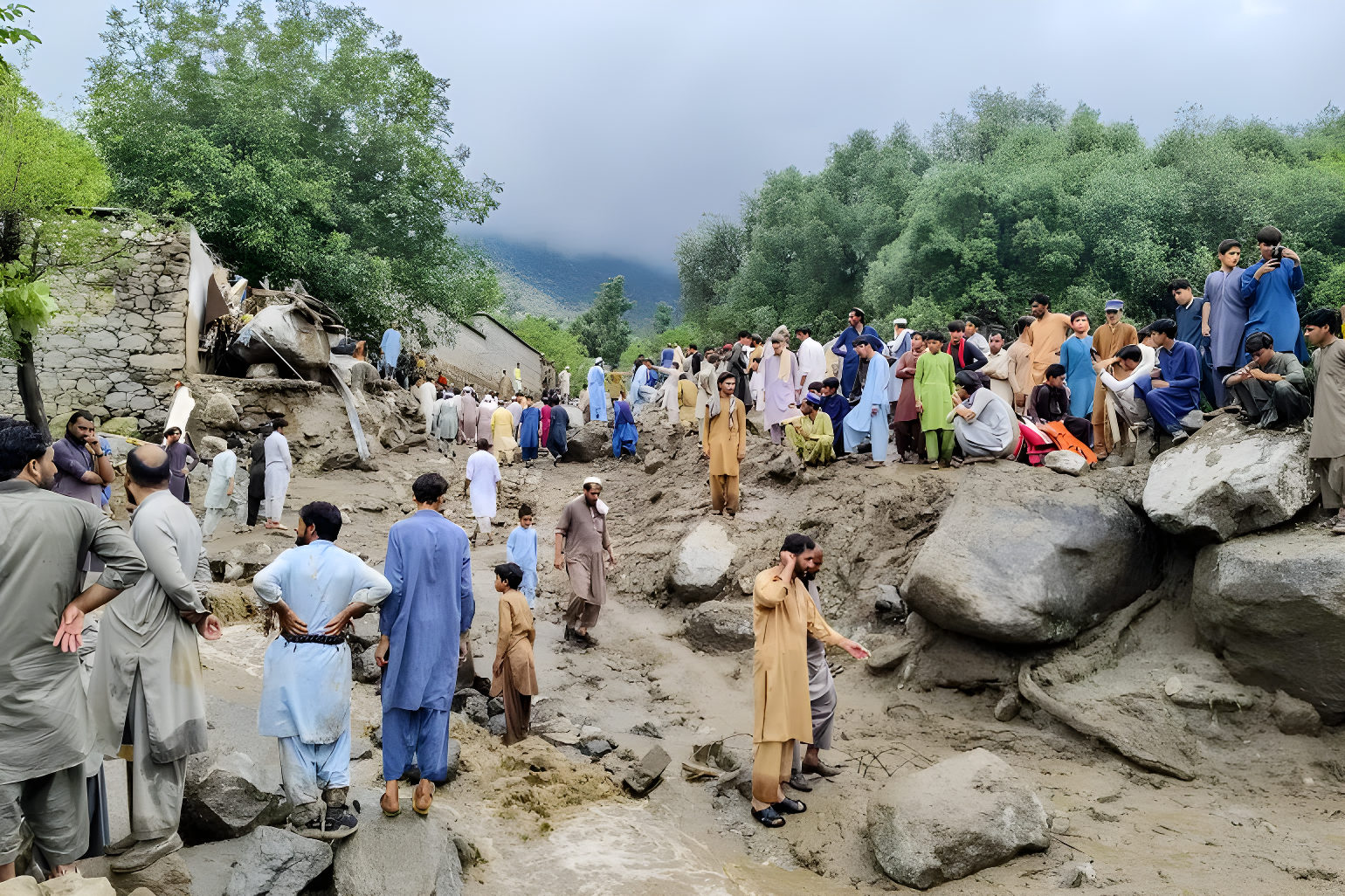
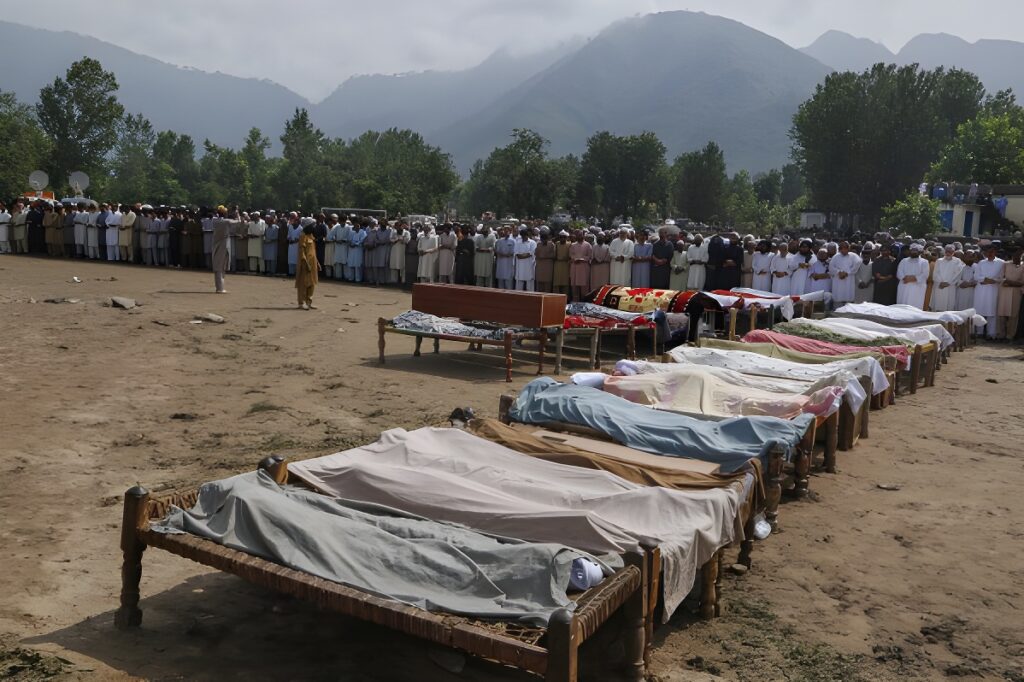
Flash Floods in Pakistan have once again unleashed devastation, leaving hundreds dead and thousands displaced. This year’s monsoon rains have hit the northern belt hardest, especially Khyber Pakhtunkhwa, where entire villages were swept away within hours. Officials report more than 320 deaths, with Buner district alone witnessing mass funerals after unprecedented downpours.
Survivors describe the scenes as nothing short of “doomsday.” Homes have crumbled, roads have vanished under water, and families remain stranded on mountain tops waiting desperately for help. In one heartbreaking incident, even a rescue helicopter crashed, killing the crew who were on a mission to save lives.
The Provincial Disaster Management Authority (PDMA), along with the army and local administration, has set up relief camps and medical centers. Government helicopters and boats are being used to evacuate stranded families, while NDMA (National Disaster Management Authority) is distributing tents, food packs, and clean drinking water. Prime Minister Shehbaz Sharif has directed federal agencies to accelerate relief efforts and has appealed to the international community for support, reminding the world of Pakistan’s climate vulnerability.
Despite these efforts, ground realities remain harsh. Many victims complain of slow response, shortage of medicines, and poor coordination between local and federal departments. With roads blocked and communication networks down in hilly regions, aid is struggling to reach the most affected villages.
Experts say the rainfall this year is 10–15% higher than normal, a trend strongly linked to climate change. Pakistan is among the most climate-vulnerable countries, yet infrastructure remains fragile. From broken drainage systems to poorly planned housing near riverbeds, the disaster is partly man-made.
This(Flash Floods in Pakistan) tragedy is also a reminder of the devastating floods of 2022, when one-third of the country was submerged, causing losses of nearly $40 billion. Lessons were promised, but little has changed on the ground. Once the waters recede, the same cycle of rebuilding, forgetting, and unpreparedness may continue unless real reforms happen.
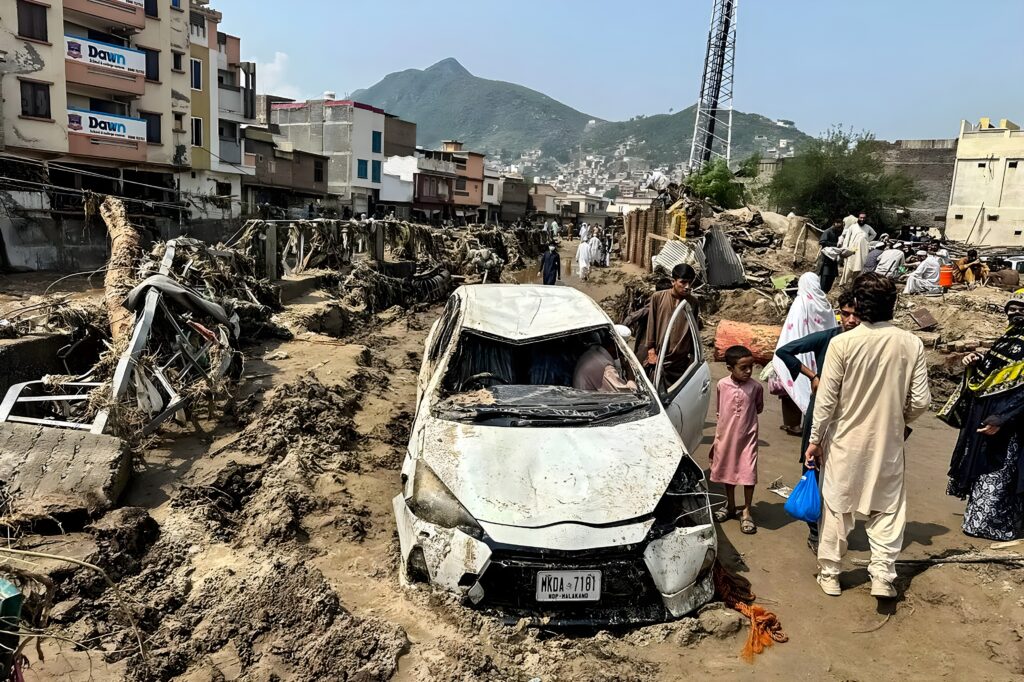
For now, communities in KP and Gilgit-Baltistan need urgent relief. But in the long run, Pakistan needs stronger climate adaptation policies—dams, drainage networks, early warning systems, and relocation plans for at-risk villages. Without them, each monsoon will bring another chapter of loss.